Strengthening Your Digital Presence with SWOT Analysis
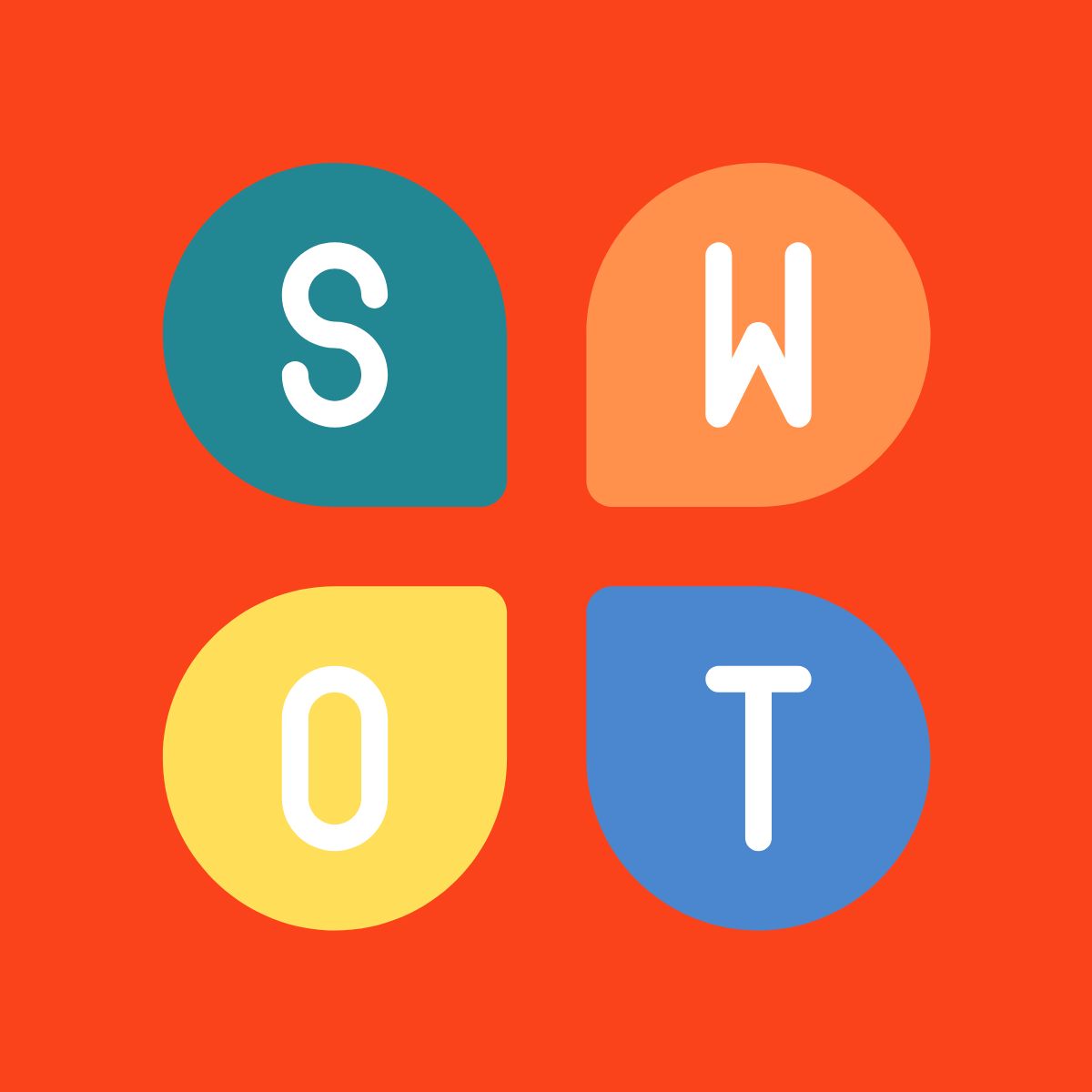
A SWOT analysis is a structured way of assessing where your business stands before committing to a strategy.
Strengths, weaknesses, opportunities, and threats. The framework is straightforward, but applied specifically to your website and digital marketing position it produces a clear picture of what is working, what is not, and where the most realistic opportunities for improvement are.
For businesses in Belfast and across Northern Ireland, a digital SWOT analysis is a useful starting point before investing in SEO, paid search, or content marketing. It prevents the common mistake of investing in tactics before understanding the underlying position, for example running Google Ads to a website with fundamental conversion problems, or creating new content while existing pages are cannibalising each other’s rankings.
How to Gather the Data You Need
A SWOT analysis is only as useful as the data behind it. Before filling in the four quadrants, pull together the information that gives you an accurate picture of your current digital position.
Google Search Console shows which queries your site ranks for, at what positions, and with what click-through rates. It also shows indexing errors, mobile usability problems, and Core Web Vitals scores. For a Northern Ireland business, this data tells you which local search terms you are visible for and which you are not, and where the gap between impressions and clicks is largest.
Google Analytics shows how visitors behave once they arrive on your site. Which pages generate the most engagement. Which pages have high bounce rates. Which traffic sources convert into enquiries or sales. A Belfast accountancy firm might find that their blog posts generate significant traffic but their services pages convert poorly, which points to a specific weakness in the conversion path rather than a general SEO problem.
Screaming Frog crawls your site and flags technical issues including broken links, missing title tags, duplicate content, and pages with no internal links. These are the technical weaknesses that suppress rankings regardless of how good the content is.
A manual review of your key competitors’ websites, Google Business Profiles, and search rankings for your target terms rounds out the picture. In Northern Ireland, your direct competitors are usually a small number of local businesses targeting the same geographic market. Understanding what they are doing well and where they are weak identifies the opportunities most worth pursuing.
Strengths
Strengths are the elements of your digital presence that are genuinely performing well. Be specific rather than listing vague positives. “Good website” is not a strength. “Ranking on page one for three high-intent local search terms” is.
Common genuine strengths for Northern Ireland business websites include established domain age and accumulated authority, strong Google Business Profile review volume, specific blog posts or service pages generating consistent organic traffic, a clear geographic focus that gives local relevance signals, and credentials such as Go Succeed NI or InterTradeIreland approval that provide both credibility and backlink opportunities.
Identifying strengths matters because they are the foundation to build from. A Belfast solicitor whose employment law page already ranks on page two for “employment law solicitor Belfast” has a genuine strength to develop. The page is closer to generating meaningful traffic than a competitor starting from scratch. That specific strength informs the strategy: concentrate optimisation effort on moving that page to page one rather than creating new pages on the same topic.
Weaknesses
Weaknesses are the internal factors holding your digital performance back. They are within your control to address, which distinguishes them from threats.
For Northern Ireland business websites, the weaknesses that appear most consistently in audits are thin service pages with no location-specific content, missing or duplicate title tags across multiple pages, no schema markup giving Google structured data about the business, a weak or incomplete Google Business Profile, few or no backlinks from relevant local sources, and blog content published without a keyword strategy that accumulates as low-quality pages dragging down overall site quality.
Technical weaknesses are often invisible to the business owner but clearly visible in Search Console and Screaming Frog data. Pages accidentally set to noindex, redirect chains that have built up over years of site changes, and page speed problems on mobile are all weaknesses that suppress rankings without any obvious front-end symptoms.
Being specific about weaknesses makes them actionable. “Poor SEO” is not a weakness you can act on. “Three service pages with duplicate title tags targeting the same keyword” is a weakness with a clear fix. “Google Business Profile missing opening hours and with only two reviews” is a weakness with specific steps to address it.
Opportunities
Opportunities are external factors you can take advantage of. In a digital marketing context, these are typically gaps in the market, competitor weaknesses, or changes in search behaviour that your business is well positioned to benefit from.
For Northern Ireland businesses, the most common opportunities identified in a digital SWOT analysis are competitor websites with thin content and weak backlink profiles on terms you are not yet targeting, local search terms with reasonable search volume and low competition that your site has no content for, the shift toward AI search where well-structured authoritative content has an advantage over thin generic pages, and funded support programmes including Go Succeed NI that reduce the cost of investing in digital marketing.
Identifying opportunities from Search Console data is straightforward. Queries where you are generating impressions but ranking between positions 8 and 20 are opportunities. You are already associated with those queries in Google’s index. Targeted optimisation work can move those pages to page one without starting from scratch. A Derry-based HR consultancy generating 500 monthly impressions for “HR consultant Derry” but ranking in position 16 has a clear opportunity to capture that traffic with focused on-page work.
Competitor gaps are identified by searching your target terms in Google and assessing the quality of what is ranking. If the page one results for “solicitor Newry” include several pages with thin content, no location-specific detail, and weak backlink profiles, that is an opportunity. If page one is dominated by well-optimised sites with strong review profiles and authoritative backlinks, the opportunity exists but requires more sustained effort to pursue.
Threats
Threats are external factors that could negatively affect your digital performance. Unlike weaknesses, they are not within your direct control, but understanding them allows you to plan around them.
For Northern Ireland businesses, common digital threats include competitors investing heavily in SEO and content who are moving up the rankings for your target terms, algorithm updates that change how Google assesses content quality or local relevance, the increasing prominence of AI Overviews in search results which reduces clicks to organic listings for some query types, and aggregator sites and national directories that dominate local search results for competitive terms, making it harder for individual business websites to rank on page one.
The shift toward AI search is both a threat and an opportunity depending on how well your content is structured. Businesses with authoritative, well-structured content that directly addresses specific queries are more likely to be referenced in AI-generated responses. Businesses with generic, thin content are more likely to be bypassed. You can read more about how to position your content for AI search in my guide to AI Search and GEO for Northern Ireland businesses.
Turning the SWOT into an Action Plan
A SWOT analysis produces value only when it leads to specific actions. The four quadrants map onto a prioritised action plan in a straightforward way.
Strengths inform where to concentrate optimisation effort for the fastest returns. The pages and terms already closest to performing well are the highest-priority targets for improvement work.
Weaknesses produce a technical and on-page fix list. Each specific weakness identified in the audit has a corresponding action. Duplicate title tags get rewritten. Missing schema gets added. Incomplete Google Business Profile fields get completed. Thin service pages get expanded with location-specific content.
Opportunities produce a content and link building plan. Keyword gaps become content briefs. Competitor weaknesses become link acquisition targets. Funded programme opportunities become applications.
Threats inform what to monitor and plan around. A competitor moving up the rankings for your primary terms is a threat worth tracking monthly in Search Console. An algorithm update affecting content quality signals is a reason to prioritise the content audit work identified in the weaknesses quadrant.
If you want help conducting a digital SWOT analysis for your Northern Ireland business and turning the findings into a prioritised SEO action plan, an SEO audit covers this as part of a complete review of your site’s current position. Alternatively, get in touch for a free consultation and I can take a look at your Search Console data and identify where the most realistic opportunities are.
Frequently Asked Questions
A digital SWOT analysis applies the standard SWOT framework specifically to your website and online marketing position. It assesses your strengths and weaknesses as internal factors you can control, and opportunities and threats as external factors in your market. The output is a clear picture of where your digital presence stands and a prioritised list of actions to improve it.
An SEO audit focuses specifically on the technical, on-page, and off-page factors affecting your search rankings. A digital SWOT analysis is broader and includes competitive context, market opportunities, and strategic threats alongside the technical findings. In practice, the two complement each other. An SEO audit provides the specific data that populates the weaknesses quadrant of a digital SWOT, while the SWOT provides the strategic framing that turns audit findings into a prioritised plan.
Once a year is a reasonable baseline for most Northern Ireland businesses. The competitive landscape, search algorithm behaviour, and your own site’s performance all change over time, so an annual review keeps the analysis current. If you make significant changes to your website, launch new services, or notice a meaningful change in your search rankings, a targeted update to the relevant quadrants is worth doing outside the annual cycle.
Google Search Console performance data, a Screaming Frog crawl of your site, Google Analytics behaviour data, and a manual review of your key competitors’ websites and Google Business Profiles covers the main inputs. For Northern Ireland businesses, checking your Google Business Profile review volume and completeness against local competitors is a specific additional data point worth including.
Yes, using the tools above. Google Search Console and Screaming Frog are both free and provide the core data needed. The challenge is interpreting the data correctly and knowing which findings are significant enough to act on. An SEO consultant can conduct the analysis more quickly and identify issues that are easy to miss without experience of what to look for, but the process itself is not technically complex for someone willing to work through the data systematically.