
Technical SEO Services for Belfast and Northern Ireland Businesses
Technical SEO is the behind-the-scenes work that makes sure search engines can actually find, crawl, and index your website properly. If Google can’t access your pages, or your site is slow, or there are errors in the code, none of your other SEO work will perform the way it should.
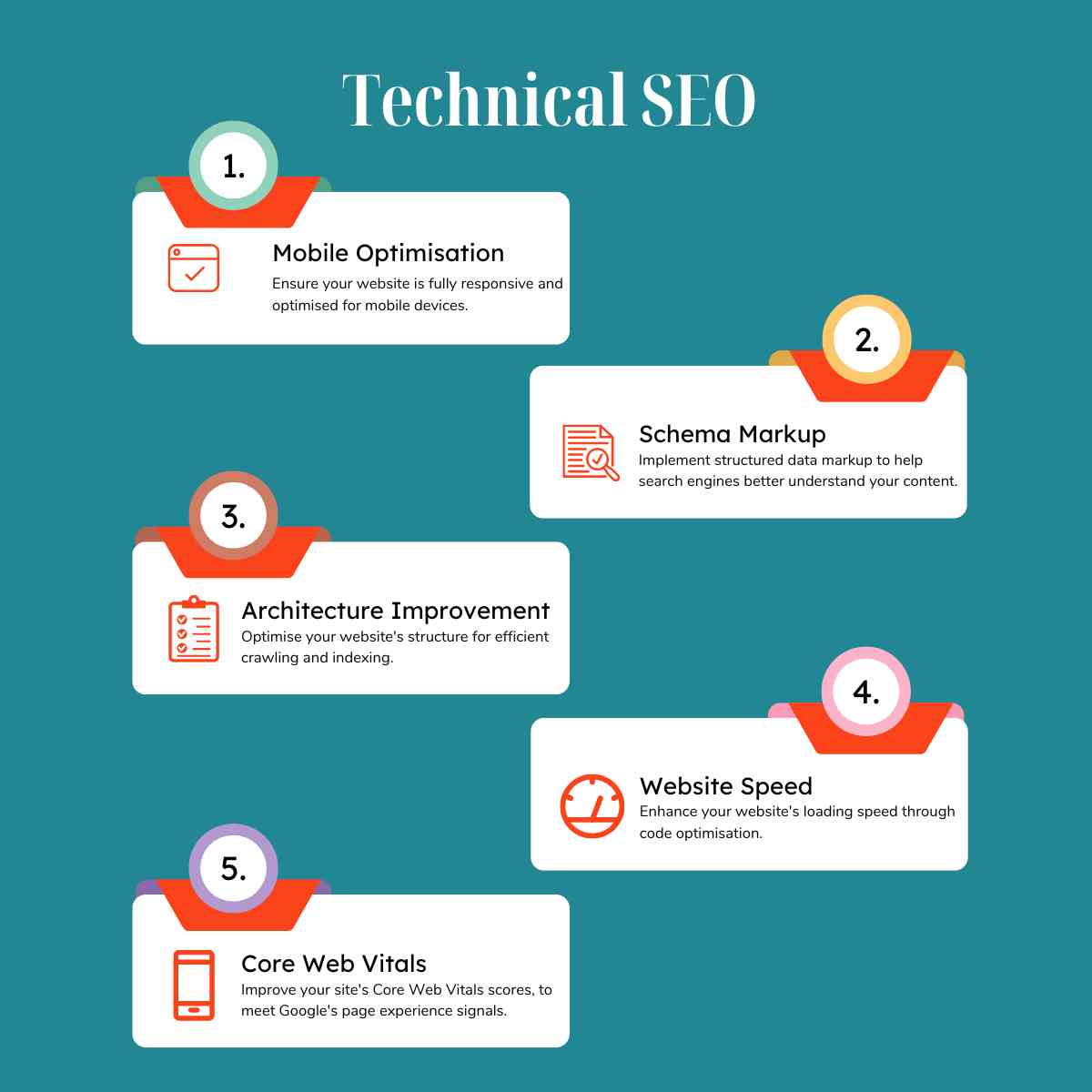
I deal with the technical issues that most business owners never see but that directly affect how your site ranks; site speed, mobile performance, crawl errors, indexing problems, and Core Web Vitals.
Why Technical SEO Matters for Your Business
Technical SEO for AI Search
Technical SEO now extends beyond Google’s traditional crawlers. There are over 150 known AI crawlers active on the web, including GPTBot (used by ChatGPT), ClaudeBot (used by Anthropic’s Claude), and PerplexityBot. Your robots.txt file controls whether these crawlers can access your site. If they are blocked, your content will never appear in AI-generated answers.
Some hosting and security tools block AI crawlers by default. Cloudflare’s Bot Fight Mode, which is enabled on all plans by default, can block legitimate AI bots without the site owner realising. I check for this as part of every technical audit.
I also review structured data and schema markup (FAQ schema, LocalBusiness schema, Organisation schema), which help both Google and AI engines understand your content. Where appropriate, I recommend implementing an llms.txt file, a newer standard that gives AI models a clear summary of your site and its most important pages.
For the full picture on AI search and what it means for your website, see my guide to AI Search and GEO.
Elements of Technical SEO Services
Future-Proof Your Website Rankings with Expert Technical SEO
Your site takes too long to load and you know you’re losing visitors. Google Search Console is flagging errors but you’re not sure what they mean or how to fix them. Your site looks fine on desktop but something’s off on mobile. You’ve been told your Core Web Vitals need work but you don’t know where to start. Pages you’ve published aren’t appearing in Google at all.
These are technical SEO problems. They’re usually invisible to the business owner but they directly affect your rankings.
These problems are fixable. A technical audit will show you exactly what needs attention and in what order. My comprehensive technical SEO audit will uncover the hidden issues affecting your website’s performance and provide a roadmap for improvement.
Check out the Results From Real Projects
Case Study 2– Workplace Assessment Provider
Result: an increase of 500% traffic
Case Study 3- Established B2B Website
Result: an increase in 44% User Engagement
How I Work on your Technical SEO
I start with a full technical audit using Google Search Console, Screaming Frog, and PageSpeed Insights to get a clear picture of your site’s health. That covers crawl errors, indexing issues, site speed, mobile usability, Core Web Vitals, broken links, duplicate content, and security. I then prioritise the issues by impact. What’s going to make the biggest difference to your rankings gets fixed first. You’ll get a clear report showing what was found, what’s been done, and what the measurable improvement is.
Common Questions about Technical SEO
On-page SEO is about your content: what is on the page, how it is structured, what keywords it targets. Off-page SEO is about external signals: backlinks, brand mentions, and reputation. Off-page SEO is about external signals: backlinks, brand mentions, and reputation. Technical SEO is the foundation underneath both. It’s about whether Google can actually access, crawl, and understand your site. If the technical side isn’t right, the other two can’t perform properly.
I’d recommend a full audit at least once a year, or whenever you make significant changes to your site; a redesign, a platform migration, adding new sections. In between, Google Search Console should be monitored regularly for crawl errors, indexing issues, and Core Web Vitals problems.
Yes, and sometimes significantly. I have seen sites gain ranking positions from fixing crawl errors alone, or from improving page speed, or from resolving indexing problems that meant pages were not appearing in Google at all. Technical SEO removes the barriers that prevent your content from ranking. If your content is good but your rankings are not matching, technical issues are usually the first place I look.
For most businesses, yes. If you sell products or services and want to be found by as many potential customers as possible, allowing AI crawlers like GPTBot, ClaudeBot, and PerplexityBot means your content can appear in AI-generated answers. The exception is publishers or content creators who are concerned about their content being used to train AI models. I check your robots.txt and hosting settings as part of every technical audit to make sure your access is configured correctly.